

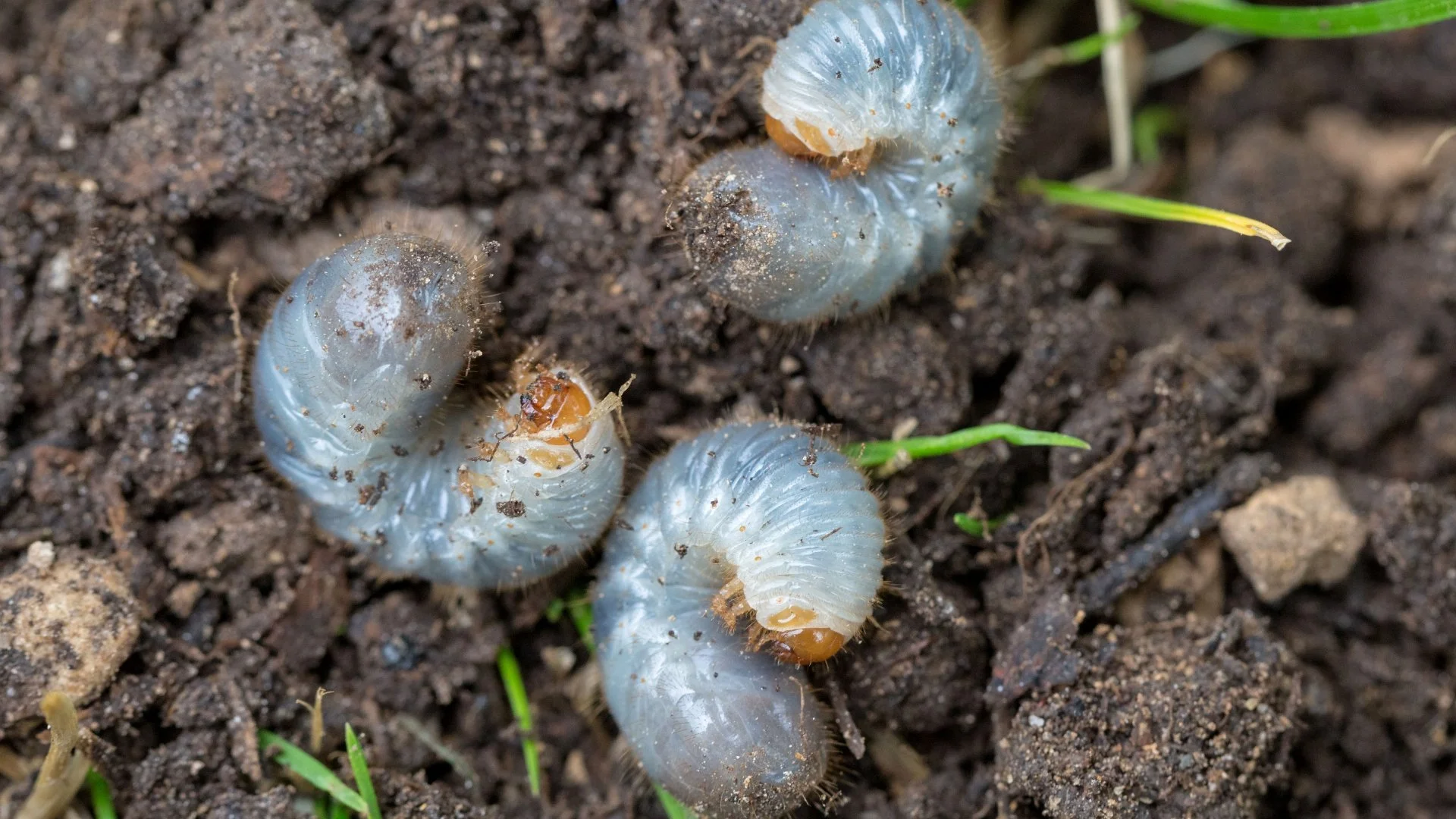
A grub infestation can be difficult to spot until significant damage has already occurred. Common signs include irregular brown patches, turf that feels spongy or lifts easily from the soil, and increased activity from birds or other animals searching for grubs. If you notice these warning signs, it's important to act quickly. Contact professionals so they can apply a curative grub treatment to eliminate the infestation from your lawn in Colorado.
Your lawn might have a grub infestation if it feels spongy when you walk on it.
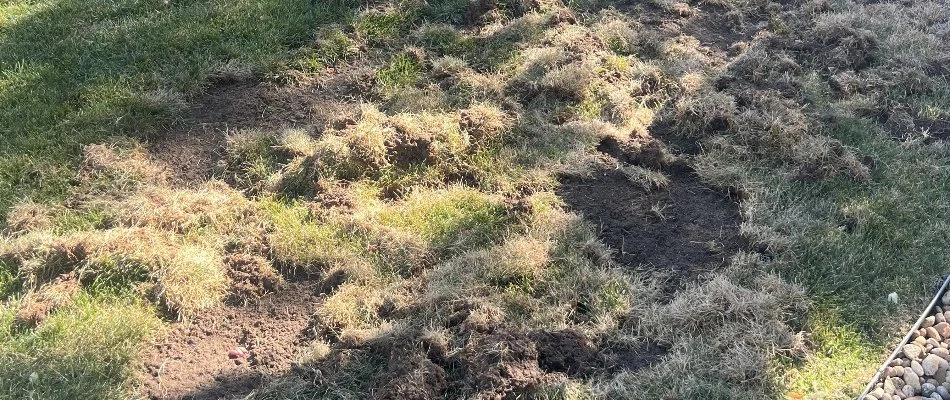
One of the first signs that your lawn may be infested with grubs is a spongy feel underfoot. As grubs feed on the roots of your grass, they weaken the grass's connection to the soil. Their feeding activity disrupts the root system, making the lawn feel soft and springy when you walk on it. If you notice that your lawn lifts up easily, almost like a carpet, it's a strong indication that the roots are no longer anchoring it down effectively. This is a telltale sign of grub damage, as the roots have been severed from the soil, leaving the grass vulnerable and unstable.
Irregular patches of brown grass can indicate a grub infestation.
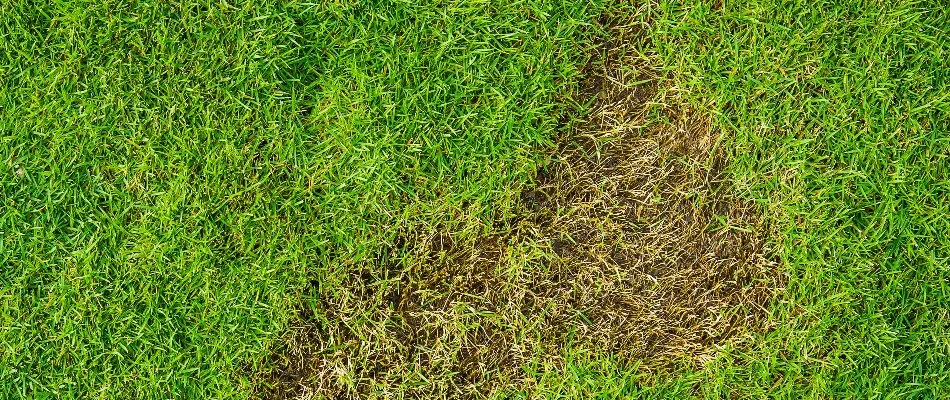
Another common symptom of a grub infestation is the appearance of irregular brown patches scattered across your lawn. As grubs consume the roots, the grass loses its ability to absorb essential nutrients and water. This deprivation causes the grass to die, resulting in unsightly brown patches. These dead areas are often irregular in shape and can be scattered throughout your lawn. If you notice these patches, it's crucial to investigate further, as they can quickly spread and cause significant damage if left untreated.
An increased animal presence on your lawn can indicate it is infested with grubs.
Nature often provides clues about what's happening beneath the surface of your lawn. An increase in animal activity, such as raccoons, skunks, or birds, could indicate a grub problem. These animals are attracted to your lawn because they feed on grubs. If you observe them digging or pecking at your grass, it's a sign that they are hunting for these larvae. While these animals can help control the grub population, their presence can also cause additional damage to your lawn. Therefore, it's important to address the root cause of the problem promptly.
What should you do if you have a grub infestation?
If you've identified signs of a grub infestation, it's essential to act quickly to prevent further damage. The most effective way to tackle this issue is to contact lawn care professionals and schedule a curative grub control treatment. These experts have the knowledge and tools necessary to assess the extent of the infestation and apply targeted treatments to eliminate the grubs. Curative treatments are designed to kill grubs at various stages of their life cycle, ensuring comprehensive control.
In addition to professional intervention, consider investing in preventative treatments to reduce the likelihood of future infestations. These treatments are designed to target newly hatched grubs and eliminate them before they cause extensive damage to your lawn.
Call us today to schedule our grub control service!
Grubs can cause extensive damage to your lawn, so it's important to recognize the signs of an infestation so you can take prompt action. At Total Turf Lawn Care, we offer a grub control service that includes curative treatments to eliminate existing grubs on your lawn. Our treatments are highly effective and will stop grubs in their tracks, preventing further damage to your lawn. We also offer preventative treatments to protect your lawn from these root-munching pests in the future.
We offer this service to residential and commercial properties, as well as HOAs, in Longmont, Niwot, Frederick, and nearby areas in Colorado. Call us at (720) 343-9845 to schedule a treatment for your lawn!
